

Harlum Welfare | Waste Management
A controlled service route from turbine to shore.
Self-contained welfare is only complete when the waste route is planned, controlled and supported. Harlum combines exchangeable containers, clear handovers and an authorised shore-side route so the main welfare unit can remain in place while waste is removed responsibly.
One portfolio, three welfare routes
Harlum Storm
The exchangeable waste system supports long-term servicing without removing the complete external welfare unit.
Harlum Breeze
The compact drop-box toilet can be serviced and replenished around planned turbine and O&M visits.
Harlum Calm
Cleaning, consumables and any toilet or sanitary-waste requirements are agreed through the workforce-led configuration.
Choose the service model
Full Service - Onshore / Offshore
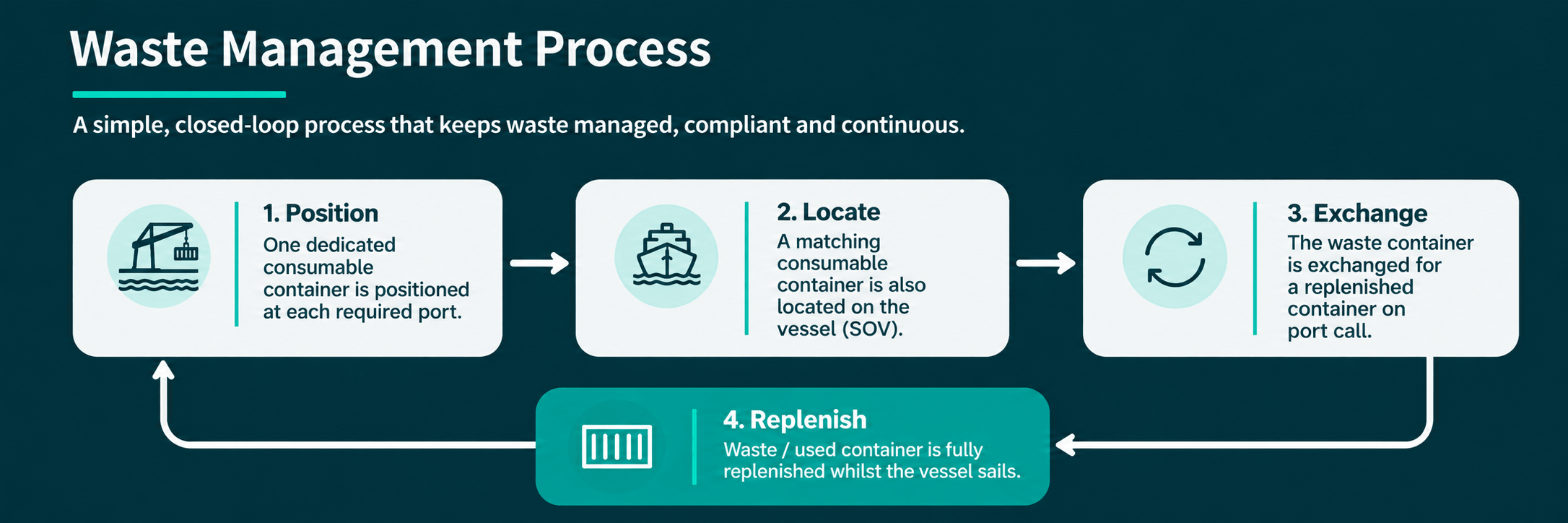
A coordinated route that can cover prepared container supply, planned offshore exchange, sealed return, maintenance, waste handling, proper disposal, reconditioning and reinstallation.
Best for customers seeking a more hands-off service chain.
Part Service - Onshore
An onshore-focused option aligned to the customer's own offshore and logistics arrangements. Responsibilities for exchange, transport, handover, documentation and shore-side support are agreed in advance.
Best for customers with established O&M and port processes.
The service clock starts with use
The servicing period begins after first use rather than simply from installation. If a unit remains unused for part of the O&M phase, that unused time does not automatically count towards the service schedule. The actual interval is agreed around usage, temperature and the selected system.
What is agreed before deployment
Product and toilet route
Storm, Breeze or Calm plus the agreed toilet or alternative arrangement.
Service scope
Full Service or Part Service and the division of customer and Harlum responsibilities.
Usage model
Technician count, expected frequency, temperature and service cadence.
Offshore exchange
Method, equipment, responsible team, task controls and training.
Vessel and port interface
Transport, handover, storage, documentation and timing.
Onshore waste route
Named authorised handler, disposal process, cleaning and reconditioning.
Records
Inspection, exchange, chain-of-custody, incidents and close-out evidence.
Contingency
Spare prepared containers, changed schedules and response if usage is higher than forecast.
Why a controlled waste route matters
Compliance
A defined route for appropriate waste handling and disposal.
Control
Clear ownership, handovers, records and service responsibilities.
Continuity
Exchange planned around the operating schedule rather than an avoidable interruption.
Environment
Sealed return and responsible shore-side handling rather than discharge to the marine environment.
Hygiene
Prepared containers, cleaning and replenishment support a facility people can use with confidence.
Whole-life support
Service, spares and reconditioning remain connected to the welfare asset.
A waste route that supports the workforce
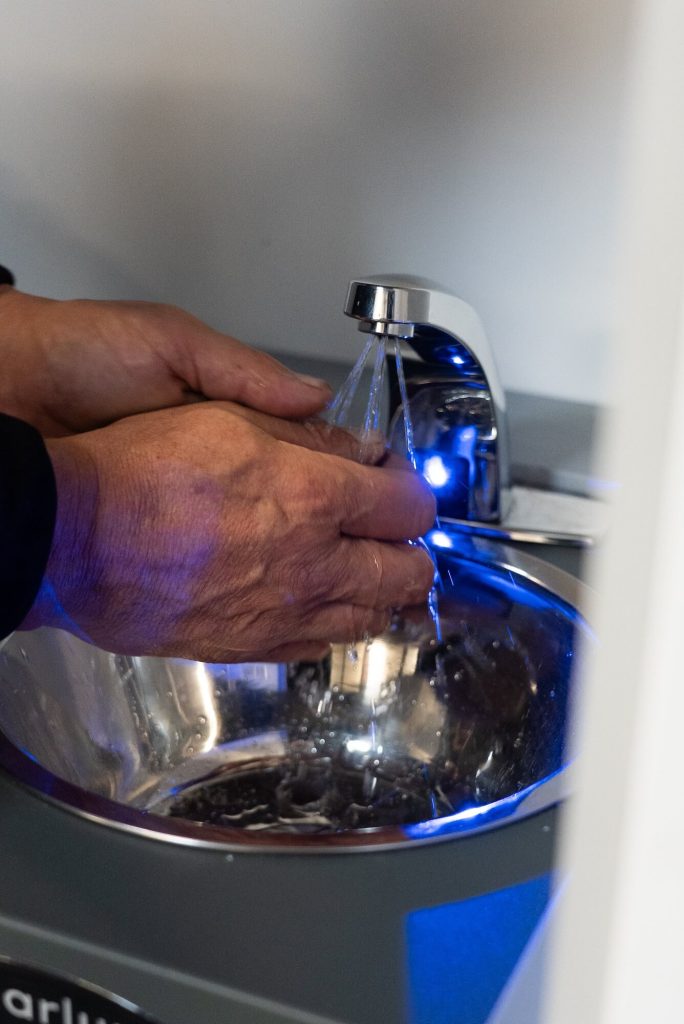
Sanitary waste, handwashing and privacy should be planned as part of the service, not left to individual technicians to manage. A clear, discreet route helps women and anyone managing medication, health conditions or personal needs use the facility confidently during long offshore shifts.
Frequently asked questions.
Does the complete welfare unit return to shore for servicing?
No. The main unit remains in position. The exchangeable waste container is sealed and removed through the agreed service route.
Who carries out the offshore exchange?
That depends on the service option and project arrangements. Harlum and the customer agree the responsible team, method, training, equipment and handover points before deployment.
What happens to the sealed container onshore?
It moves through the named authorised process for appropriate disposal, cleaning and reconditioning before a prepared container is returned to service.
Can servicing align with planned vessel calls?
Yes. The service model is designed around expected use and the customer's vessel, port and O&M rhythm wherever practical.
Plan the welfare unit and the waste management together.
Harlum will review the product, toilet arrangement, expected use, service responsibilities, exchange method and onshore route around the project.